The 14th annual WOMEN OF CHRIST® CONFERENCE will take place on November 6, 2021 at Washington County Fair Park.
This year’s theme, Let Him In, inspires us to invite Jesus into our hearts.
Come to hear captivating talks from: the duo Sisters of Life and Fr John Burns, Patty Schneier, Fr Leo Patalinghug, Fr Nick Baumgardner, and Emcee Anne Auger.
Archbishop Jerome Listecki will celebrate the closing Mass at 4:00pm. Confession and Adoration will be available. Vendor Market is open until 3:00pm.
Please Note: Mask wearing and social distancing will not be guaranteed at the conference.
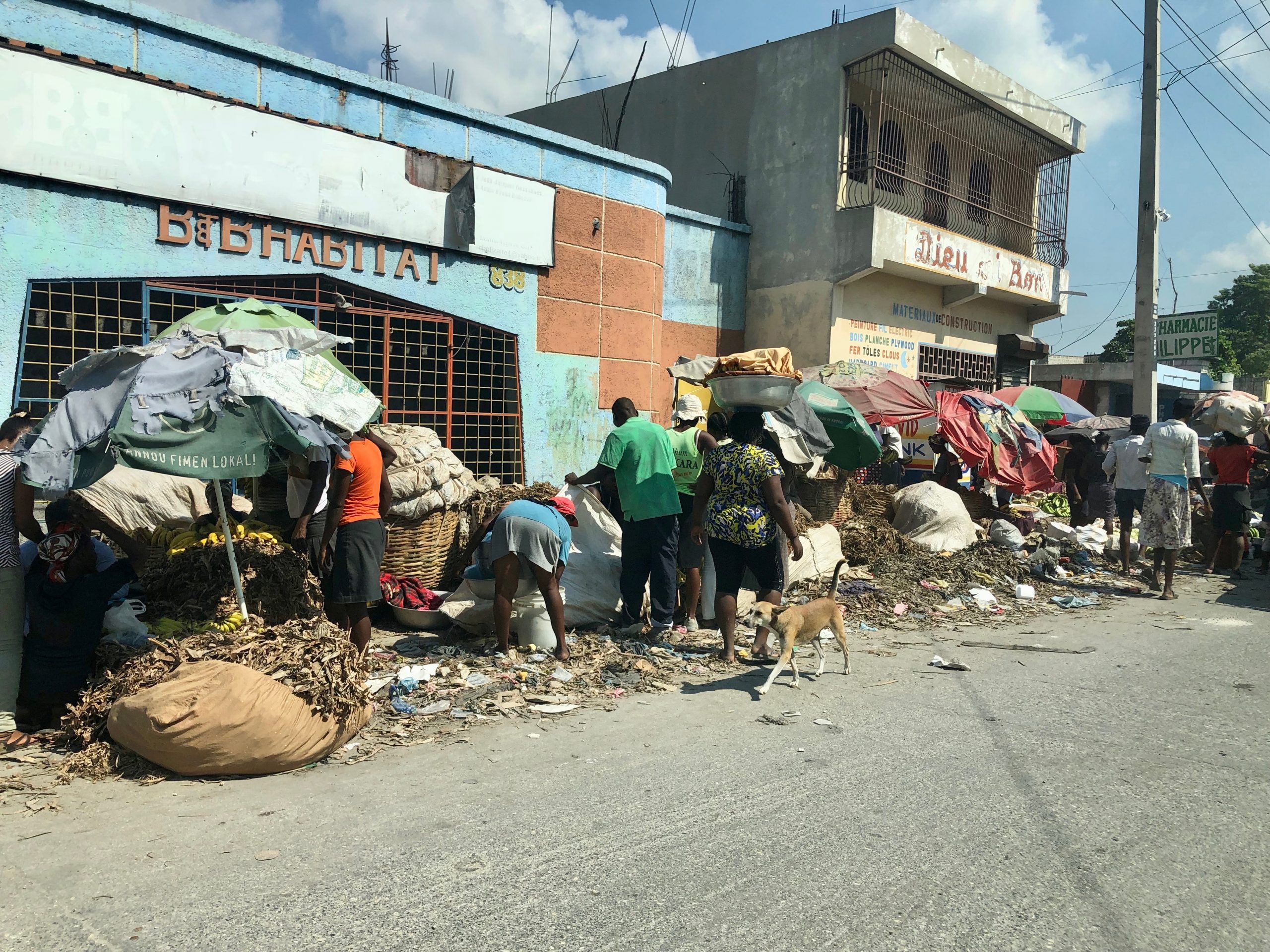
Last weekend we took up a second, special collection for the victims of natural disasters in Haiti. We will continue to collect for these needs through next weekend.
The funds collected in this special appeal will become part of the Bishops Emergency Disaster Fund and will be used to support the United States Conference of Catholic Bishops for pastoral and reconstruction needs
of the Church as well as the efforts of Catholic Relief Services and/or Catholic Charities USA, the official relief agencies of the U.S. Catholic Church, as they and their local agencies respond to immediate emergency needs and aid in long-term rebuilding and recovery efforts. Funds will be used in response to the earthquake and Tropical Storm Grace calamities in Haiti and any other
disasters that occur and will be distributed where they are most needed. However, if such purpose(s) become unnecessary, impractical, or impossible to fill, USCCB may use such contributions for other emergency disaster relief where it is most needed as determined by the Committee on National Collections using its emergency response protocol.
PHILADELPHIA – The National Catholic Bioethics Center (NCBC) provides education, guidance, and resources to the Church and society to uphold the dignity of the human person in health care and biomedical research. In fulfilling its mission, the NCBC draws on the full range of the teachings of the Church, including its social teachings, which provide guidance on appropriate respect for persons while building up the common good.
The NCBC notes with great sadness the increasingly heated rhetoric and even violence associated with the vaccine mandate debates. Christ and the Church urge us, “As I have loved you, so you also should love one another.” (John 13:34) Frustration and anger on all sides must be transformed by charity and understanding for all our brothers and sisters.
The Church has long supported science, medicine, and biomedical research that serves the good of human persons and the use of vaccines for centuries as a crucial means of protecting the health of entire communities. In the present world-wide health crisis, the Church encourages people to receive vaccination for COVID-19, even though the currently available vaccines in the U.S. have a remote connection to abortion through the use of certain cell lines. At the same time, the U.S. bishops have continued to advocate for vaccines that lack even a remote connection to the evil of abortion. For example, Archbishops Joseph Naumann and Paul Coakley, and Bishops Kevin Rhoades and John Doerfler called on the US Food and Drug Administration (FDA) to ensure that Americans have access to “vaccines that are free from any connection to abortion.”
Emergency Use Authorization by the FDA of a vaccine that did not rely on abortion-derived cell lines for manufacture and/or testing would remove a major obstacle to COVID-19 vaccination for many. The NCBC noted in our Vaccine Exemption Resource for Individuals that the Church permits people to use any of the currently available COVID-19 vaccines. Discernment with consciences informed by Church teaching is required, as well as all the elements of free and informed consent needed for any medical intervention.
It is extremely important to embrace both respect for the common good and conscience as the Congregation for the Doctrine of the Faith (CDF) did in December 2020.
Practical reason makes evident that vaccination is not, as a rule, a moral obligation and that, therefore, it must be voluntary. In any case, from the ethical point of view, the morality of vaccination depends not only on the duty to protect one’s own health, but also on the duty to pursue the common good. In the absence of other means to stop or even prevent the epidemic, the common good may recommend vaccination, especially to protect the weakest and most exposed.
Those who, however, for reasons of conscience, refuse vaccines produced with cell lines from aborted fetuses, must do their utmost to avoid, by other prophylactic means and appropriate behavior, becoming vehicles for the transmission of the infectious agent.
The CDF’s balanced teaching above is cited in full in NCBC Statement on COVID-19 Mandates.
Our NCBC guidance in our Points to Consider on COVID-19 Vaccines and Abortion-Derived Cell Lines begins the list of important factors to consider in making a decision with the following.
First and foremost, our belief that “Life and physical health are precious gifts entrusted to us by God [and that] we must take reasonable care of them, taking into account the needs of others and the common good.” Catechism of the Catholic Church, #2288
Over the past several weeks, many distressed people have sought guidance from the NCBC because of the pressures they face from looming vaccine mandates.
The NCBC fully acknowledges the complex and challenging decisions in conscience that institutions — including Catholic health care organizations — need to make not only for the sake of the persons they serve but also for the good of their employees. Respecting the conscientious judgments and religious beliefs of these employees is an indispensable dimension of this. A July 27th Joint National Hospital Association Statement said that mandatory vaccination policies needed appropriate accommodations for medical or religious reasons.
Our NCBC Vaccine Exemption Resource for Individuals was created to help Catholics express the religious basis for accommodating their judgments of conscience. The Catholic faith provides many resources to inspire people to care for others, to serve the common good, and to make sound ethical decisions about how best to protect their own life and health. The NCBC shall continue to help people to draw upon the deepest resources of the Catholic faith to address the many challenges posed by COVID-19 with integrity and charity.
Though this letter is commonly known as having deep meaning in the Church and what the church is, it seems this chapter is taking a left turn and talking about marriage. But when you look closer at the meaning behind this chapter, Paul is not changing his thought process. Rather, in describing the family, he is describing the Church and God’s love for us. There is way more than I can go through in these short articles, but I do hope that God could open your minds to a greater reality than what meets the eye.
Paul does not see the Church as some functional institution that some mere human made up. Institutions we can control, manipulate and be lord of. Things we know and understand, we tend to control. We try to use our knowledge as a way to hopefully make things better. But the Church is not something to simply command and govern the way we would conventionally think of it.
Rather, the Church is a mystical body; in particular, it is the mystical body of Christ who is God. Because Jesus is God, the body of Christ is a mystery. By the very fact that the Church is a mystery, we cannot know everything about it; Christ is our head. If we do not know everything about the Church, then we cannot control it. This is an irony as we even have a Pope, bishops and priests that have authority in the Church. But those with authority are the servants of all (Mt 20:26). The authority they have is begotten of love. That is why Paul exhorts us all, “Follow the way of love, even as Christ has loved you” (5:1).
God came to empower us, but to what has He empowered us? He has empowered us to love and thus conquer sin and death. We want to fix our sins by power, but it is love that inspires us to give up the sins of the flesh such as lust (3). True love as we find it in God conquers all sin; that is why Satan wants to attack the real meaning of love and twist it to be an experience of lust, manipulation, greed and emptiness. It is also the reason why Satan would attack the sacraments of love: first the Eucharist and then the sacrament of Holy Matrimony.
Marriage was designed by God to be a means of making the love of God happen in this world between spouses. That is why “no fornicator, no unclean or lustful person…has any inheritance in the kingdom of God” (v5). In fact, you will notice in that same verse the scripture would refer to such a person as “an idolater.” What does lust in sex have to do with idolatry, which is a false worship? What is the connection between who God is and marriage? The answer can be found in the fact that God is love itself. God is love and marriage is fulfilled in love. When we say God is love, this is in the understanding that the experience of love comes from God. This experience of love is to be an authentic expression of and in congruity with the one who is love. Anything else is a false image; it would be idolatry.
It is a good thing that the Church is a mystery, otherwise those of evil intent would manipulate it into oblivion and utterly destroy it with “worthless arguments” (v6). So by the very fact that the Church is a mystery, God protects it. At the same time, because it is a mystery, the image of the Church and marriage can be easily twisted into a false image. The false image leads to gross abuse. It leads to selfishness, lust, anger, a twisted self-understanding and much chaos (v7), whereas honoring the mystery in the Church and marriage encourages respect for God’s design and, therefore, each other as spouses and in children. It encourages and is open to an authentic expression of love when it is sought out.
on the 150th Anniversary of the Proclamation of Saint Joseph as Patron of the Universal Church
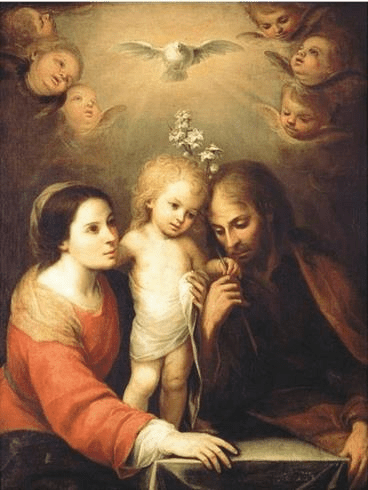
After Mary, the Mother of God, no saint is mentioned more frequently in the papal magisterium than Joseph, her spouse. My Predecessors reflected on the message contained in the limited information handed down by the Gospels in order to appreciate more fully his central role in the history of salvation. ‘…Patron of the Catholic Church, …. Patron of Workers, … Guardian of the Redeemer…patron of a happy death…’
‘…Now, I would like to share some personal reflections on this extraordinary figure, so close to our own human experience.’
A Tender & Loving father
Joseph saw Jesus grow daily “in wisdom and in years and in divine and human favour” (Lk 2:52). As the Lord had done with Israel, so Joseph did with Jesus: he taught him to walk, taking him by the hand; he was for him like a father who raises an infant to his cheeks, bending down to him and feeding him (cf. Hos 11:3-4).
In Joseph, Jesus saw the tender love of God: “As a father has compassion for his children, so the Lord has compassion for those who fear him” (Ps 103:13).
In the synagogue, during the praying of the Psalms, Joseph would surely have heard again and again that the God of Israel is a God of tender love,[11] who is good to all, whose “compassion is over all that he has made” (Ps 145:9).
The history of salvation is worked out “in hope against hope” (Rom 4:18), through our weaknesses. All too often, we think that God works only through our better parts, yet most of his plans are realized in and despite our frailty. Thus Saint Paul could say: “To keep me from being too elated, a thorn was given me in the flesh, a messenger of Satan to torment me, to keep me from being too elated. Three times I appealed to the Lord about this, that it would leave me, but he said to me: ‘My grace is sufficient for you, for power is made perfect in weakness’” (2 Cor 12:7-9).
Since this is part of the entire economy of salvation, we must learn to look upon our weaknesses with tender mercy.[12]
The evil one makes us see and condemn our frailty, whereas the Spirit brings it to light with tender love. Tenderness is the best way to touch the frailty within us. Pointing fingers and judging others are frequently signs of an inability to accept our own weaknesses, our own frailty. Only tender love will save us from the snares of the accuser (cf. Rev 12:10). That is why it is so important to encounter God’s mercy, especially in the Sacrament of Reconciliation, where we experience his truth and tenderness. Paradoxically, the evil one can also speak the truth to us, yet he does so only to condemn us. We know that God’s truth does not condemn, but instead welcomes, embraces, sustains and forgives us. That truth always presents itself to us like the merciful father in Jesus’ parable (cf. Lk 15:11-32). It comes out to meet us, restores our dignity, sets us back on our feet and rejoices for us, for, as the father says: “This my son was dead and is alive again; he was lost and is found” (v. 24).
Even through Joseph’s fears, God’s will, his history and his plan were at work. Joseph, then, teaches us that faith in God includes believing that he can work even through our fears, our frailties and our weaknesses. He also teaches us that amid the tempests of life, we must never be afraid to let the Lord steer our course. At times, we want to be in complete control, yet God always sees the bigger picture.
Paul, in the fourth chapter to the Ephesians, deals with two major issues: first the Church and how He distributes grace through the church, then he deals with the fact that we must give up sin and the ways of the world.
Paul starts off reminding us of all the graces Jesus has given us all. God has a right to choose how He gives His gifts as He pleases (4:7). Before Christ “ascended” and took His seat of authority, He “descended,” suffered and died for us so that those graces would be won for us (9-10). We are the “Body of Christ.” So these ministers are called to serve the ones God loves so dearly. So Jesus did in fact come to begin a Church: His Church. This Church would operate on His grace, not mere human effort. In God’s grace, He gave us His Church and called all its ministers to be a means of His grace to His people (11-12). Verse thirteen reaffirms that we are part of the body of Christ when we form that “perfect man who is Christ come to full stature.” We are no longer our own bodies. Jesus bought us back from the one who did own us. Or have we given ourselves back to the evil one? As Baptized people, Jesus has grafted us onto Him. This grace came at a very dear price. Moreover, we are called to form that ‘perfect’ man.
This leads to the second issue. We “must no longer live as the pagans do” (17). How many Catholics run to the way of this pagan world. The world says obey your passions, whereas the Church says to control your passions. The world says letting your past go is the way to freedom, whereas the Church says that letting your passions go is the sure way to slavery. We become enslaved to our own passions in addictions, bouts of rages where we regret things we’ve done. Letting passions go also make us susceptible to being controlled and manipulated. How easy it is to ruin relationships by saying bad things about another, true or not. How easy it can be to manipulate a person into buying this or that when they really cannot afford it or was simply a bad buy. Emotions trick us into lust before we have a chance to build true love in marriage. When lust enters into a relationship, it is all the more difficult to re-learn how to love. Lust teaches selfishness in the relationship, whereas true love inspires sacrifice. Lust has no place in the life of a Catholic.
The world teaches us that it is ok to lie. But such dishonesty ruins relationships and the fruitfulness it can have in our lives. If you understood that your best friend could lie to you and you could lie to your friend, how would that affect your relationship with them? How would that affect our marriages, families, or how we perceive public servants in office?
The world teaches us that holding on to anger is strength. The Church sees it as a wound that hinders our abilities to have healthy relationships. Holding onto anger weakens us. Unforgiveness teaches us to hold malice in our hearts toward others. It does not stay in us; it will always manifest itself in those around us. It comes out in bitterness, harsh words, slander, gossip and criticism. It can manifest itself in body language and tone of voice. It tears down and cannot build up.
Whereas kindness, compassion and forgiveness bring life and hope. It brings hope to the one forgiven, but it also gives hope to the forgiving. A relationship is restored and ties to the injury done are severed. Fear of the suffering dealt no longer has to be present. It frees the soul. When a person is truly forgiven, neither do they have to fear being manipulated from shame of the past sin.
If we are to be a part of the body of Christ, sin, worldliness and the flesh are to be put aside. There is no straddling the fence; there is no cafeteria Catholicism.
A Special Meeting of the St Joseph Marian Society will be held on Thursday, August 19, at 1:00pm in the Daleiden Room. Items for discussion will include the location and time of future meetings, as well as how we can best serve our church and community going forward.
This is an important meeting as our regular meetings begin in September and plans to be put in place soon.
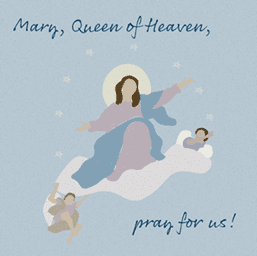
The Solemnity of the Assumption celebrates the Blessed Mother’s entrance into heavenly glory. The Catechism explains that Mary “was taken up body and soul into the glory of heaven, where she already shares in the glory of her Son’s Resurrection, anticipating the resurrection of all members of his Body” (CCC, 974).
Mary’s Assumption into heaven reminds us that life on earth is a pilgrimage to our ultimate destination. We prepare in hope for our own passage into eternal life by the choices we make today. When we choose to love and follow God in our daily lives, we strengthen our relationship with Him, and this relationship is the true meaning of heaven: “To live in heaven is ‘to be with Christ’” (CCC, 1025 citing St. Ambrose, In Luc.,10,121:PL 15 1834A.).
We can see how, throughout her life, the Blessed Mother continually chose to go deeper into her relationship with God. She modeled how to value and respect His precious gift of human life, from the moment of conception to its natural end. In the Annunciation, through her “yes,” Mary witnessed to the undeniable humanity of unborn children as she conceived and carried the Christ child in her womb. After the Annunciation, having learned that her cousin Elizabeth was with child, she went in haste to her aid.
Our Blessed Mother shows us how the way we live today can prepare us, in hope, to also enter into heavenly glory at the end of our lives. Are we open to God’s precious gift of new life? How do we support expectant mothers and parents of young children? Do we prioritize showing our love and care for loved ones who are ill or aging?
Holy Mary, Mother of God, pray for us sinners, now and at the hour of our death. Amen.